Stay up-to-date with us!
Blog
Policy insights, analysis, and commentary on governance, equity, and the issues shaping Black communities in Canada.
Beyond Emancipation Day | Building the Future our Ancestors Imagined
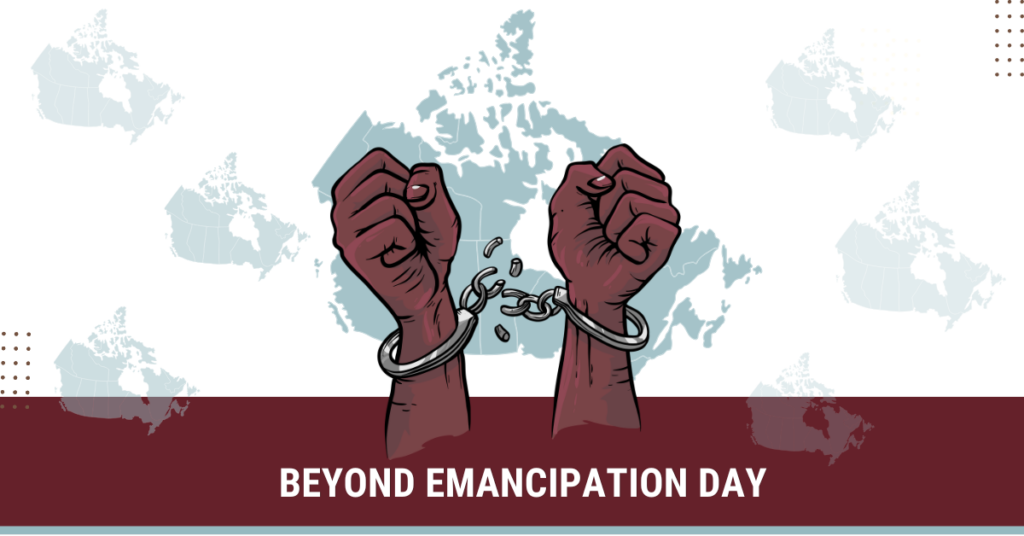
“The most meaningful way to honour freedom is to build a future where the next generation can lead, contribute, and thrive.”
By Lolade Ozomoge
August 1, 2026
Every generation inherits two things: a history it did not choose and a future it has the power to shape. Emancipation Day belongs to both. It honours the courage of those who endured enslavement, and it challenges today’s Canadians to think seriously about the kind of country we are building for the generations that follow.
On August 1, 1834, the Slavery Abolition Act came into effect across the British Empire, legally ending the enslavement of African people. In the centuries before emancipation, thousands of Black and Indigenous people were subjected to bondage under French and British colonial rule in what is now Canada. Their labour contributed to the country’s early development, often without recognition, protection, or dignity. Emancipation changed the legal status of the enslaved, but the larger work of building an inclusive society continued long after 1834.
Black communities across Canada carried that work forward through churches, schools, businesses, mutual aid networks, cultural institutions, and local commemorations. Communities in Windsor, Owen Sound, Halifax, and many others sustained traditions that celebrated freedom, preserved history, and strengthened community life decades before Emancipation Day received national recognition in 2021. Those efforts helped expand Canada’s understanding of citizenship, belonging, and democratic participation.
The conversation in 2026 should be guided as much by possibility as by memory. Across the country, Black Canadians are leading in entrepreneurship, public service, health care, technology, education, research, arts, philanthropy, and community development. They are creating businesses, generating jobs, mentoring young people, producing knowledge, and helping shape public life. Their contributions are not a footnote to the Canadian story; they are part of the country’s ongoing growth and renewal.
That progress matters to all Canadians. A society that draws fully on the talent, creativity, and leadership of its people is stronger economically, more innovative, and more resilient. When barriers to participation are reduced, communities thrive, institutions improve, and the benefits extend well beyond any single group. Emancipation Day therefore speaks not only to Black history, but to the shared Canadian project of expanding opportunity and strengthening democracy.
The next chapter will be defined by what we choose to invest in now. Leadership development, educational opportunity, research capacity, entrepreneurship, civic participation, and strong community institutions are among the foundations of long-term national success. Countries that nurture diverse leadership pipelines are better positioned to solve complex problems, compete globally, and build public trust. Emancipation Day is a reminder that freedom is most meaningful when it creates real pathways to contribution, influence, and achievement.
Young Black Canadians are already stepping into that future. They are entering policy, law, technology, business, education, and civic leadership with confidence and ambition. Their success will depend not only on individual determination, but also on whether Canada continues to create environments where talent is recognized early, developed intentionally, and welcomed into decision-making spaces. Supporting that next generation is an investment in Canada’s future leadership.
National forums that bring together policy shapers, researchers, community leaders, advocates, industry professionals, and emerging leaders play an important role in that work. Later this year, the Canadian Black Policy Network will convene SPARK 2026: Shaping Policy, Activism & Industry to Reignite Black Brilliance in Canada, creating space for collaboration, innovation, and practical solutions that strengthen communities across the country.
The most meaningful tribute to those who came before us is not a single day of remembrance. It is the decision to build institutions, opportunities, and communities that allow future generations to lead fully, contribute fully, and thrive fully. That is the future many of our ancestors imagined. Building it is one of the most important responsibilities we share today.
Africa Day 2026: The Diaspora Call for Unity, Leadership, and Community Building
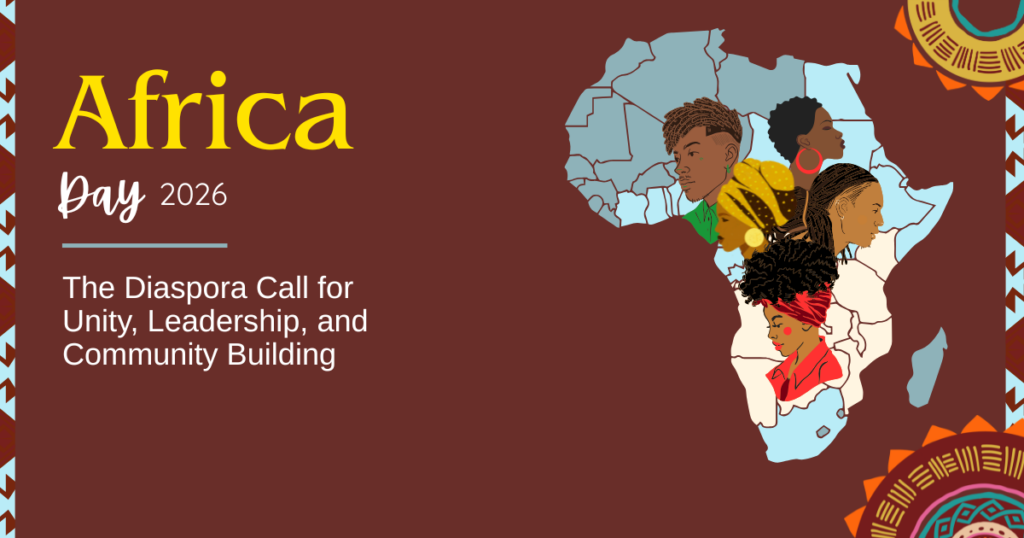
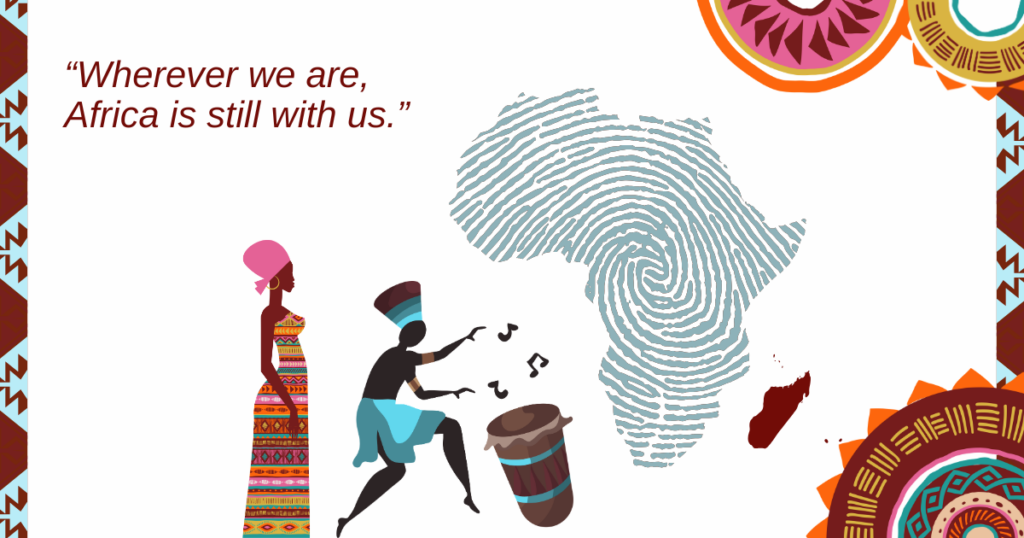
“Wherever we are, Africa is still with us.”
By Lolade Ozomoge
May 25, 2026
Africa Day is not only about celebrating the continent, but about recognizing the power, presence, and responsibility of the African diaspora across the world. It reflects an enduring connection between Africa and its global communities, shaped not only by history and movement, but also by leadership, innovation, culture, and shared ambition.
Across Canada, Africans and people of African descent continue to shape the country in significant ways. We see it in educators shaping young minds, entrepreneurs creating opportunities, artists preserving culture and memory, and community leaders building spaces of support and belonging. We also see it in students and young professionals who are asking sharper questions about the future they are inheriting and the future they want to help build.
The next generation is watching closely. They are paying attention to the kind of leadership being demonstrated today, the institutions being strengthened, and the opportunities being created for tomorrow. More importantly, they are already stepping forward with ideas, energy, and expectations that cannot be ignored.
The diaspora is not simply a population spread across different countries. It is a living global network connected through shared histories, experiences, and aspirations. Africa Day places the progress of African communities in Canada within a larger global story of resilience, contribution, and transformation.
The Imperative for Public Policy
For the Canadian Black Policy Network, this understanding carries practical importance. Strong communities are built intentionally. Progress requires leadership, coordination, investment, and institutions that are equipped to support long term growth and representation.
At a time when governments, institutions, and communities across Canada are facing growing conversations around inclusion, economic participation, public trust, and social cohesion, Black voices and expertise must remain present in the national dialogue.
Effective public policy cannot be developed separately from the communities it impacts. It must draw from lived experience, credible research, and direct engagement with the people doing the work in communities every day. This is why long-term investment in community leadership, research, civic participation, and institution building matters not only for Black communities, but for Canada’s collective future.
Moving From the Margins
Across Canada, Africans and people of African descent continue to push for stronger economic participation, better educational outcomes, meaningful representation, community wellbeing, and policies that reflect lived realities. These conversations are no longer happening only at the margins. Increasingly, Black voices, expertise, and leadership are contributing to discussions that influence the future of communities across the country.
This shift matters because communities closest to the challenges are often closest to the solutions. Community knowledge, lived experience, and grassroots leadership must be treated as assets in strengthening institutions, informing policy conversations, and building more inclusive systems.
Activating the Next Generation
Young Black Canadians are already showing what this future can look like. They are organizing initiatives, building networks, entering leadership spaces, and creating new possibilities for themselves and others. What they need are pathways that match their ambition through mentorship that guides talent, investment that scales impact, access to decision-making tables, and sustained support for intergenerational growth.
Answering the diaspora call means creating those pathways. It means strengthening institutions that serve communities consistently and effectively. It means supporting leadership that is collaborative, forward looking, and connected to community realities. It also means building systems that allow future generations not only to participate, but to thrive.
Beyond Cultural Reaffirmation
Africa Day 2026 should therefore be seen as more than a cultural celebration. It is an opportunity to reaffirm a collective commitment to building stronger communities, supporting emerging leaders, and creating lasting structures that can sustain progress for generations to come.
The strength of the diaspora has always been found in connection, collaboration, and the willingness to build despite obstacles. That spirit continues to shape communities across Canada today.
The diaspora call is clear: build with purpose, lead with clarity, invest in community, support the next generation, and continue creating a future where Africans and people of African descent across Canada have the opportunity, influence, and institutional support to lead, contribute, and thrive at every level of society.
Ricochet Diplomacy: When Canada’s Silence at the UN on Slavery Reparations Echoes Louder Than a “No”
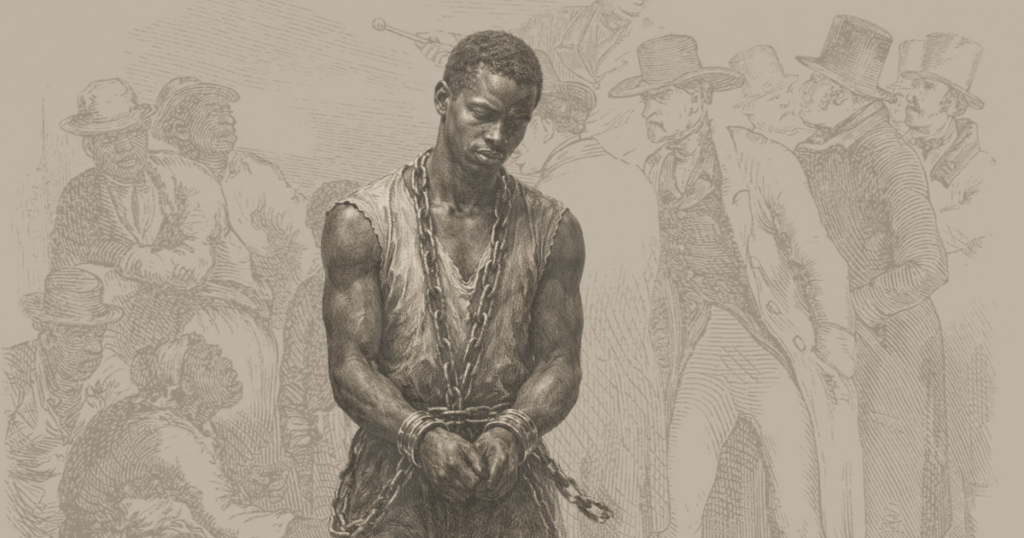
Canada did not take a position on a UN vote addressing reparatory justice for slavery. This analysis explores the implications of that choice for accountability, credibility, and Canada’s role in global human rights discussions.
By Lolade Ozomoge
May 7, 2026
As United Nations member states took positions on advancing reparatory justice for the transatlantic slave trade, Canada declined to support or oppose the resolution before the General Assembly.
Led by Ghana and backed by the African Union, the landmark resolution called for formal international dialogue on reparations, including apology, restitution, compensation, and the return of cultural artefacts. The vote took place on the International Day of Remembrance of Victims of Slavery and the Transatlantic Slave Trade.
Support was overwhelming. Only a small number of countries voted against the measure, while a larger bloc abstained. Canada joined that group alongside several Western and European states that have approached reparations with caution.
Abstention is often framed as a measured position. In moments like this, it creates distance. It sets a limit on how far a country is prepared to go when questions of historical responsibility move beyond acknowledgment and toward action.
This is where ricochet diplomacy becomes visible. What is withheld in international forums does not remain contained. It is interpreted, revisited, and reflected back in future negotiations and domestic debates. Positions taken, or avoided, continue to carry weight long after the vote itself.
Canada’s decision fits within a pattern that has drawn attention in recent years: restraint when international positions intersect with its own historical record. No detailed explanation accompanied the abstention, though governments in similar situations have pointed to concerns about legal exposure or financial liability. Those concerns do not address the central question of whether to engage in a process of reckoning.
The vote also turns attention inward. Slavery existed in what is now Canada for more than two centuries under French and British rule. Historical research documents the enslavement of thousands of Black and Indigenous people prior to abolition in 1834. The effects of that system did not end with abolition. They shaped economic structures, labour patterns, and institutional development in ways that continue to influence disparities.
Recent data reinforces this continuity. The 2025 State of Black Economics Report from Toronto Metropolitan University finds that Canada’s history of slavery, segregation, and anti-Black racism continues to shape outcomes across major systems, including housing, health care, education, employment, and the justice system. These outcomes are connected and cumulative.
For Black communities in Canada, including descendants of enslaved Africans and Black Loyalists, decisions like this are not assessed on their own. They connect to ongoing questions about redress, recognition of harm, and how history is addressed in both national and international arenas.
At the Canadian Black Policy Network, our analysis of international policy decisions and their domestic implications points to a clear pattern: when governments avoid taking a position, they limit their influence over how these discussions unfold. In this case, abstention does not remove Canada from the issue. It places the country outside conversations that will continue shaping how accountability for the transatlantic slave trade is pursued internationally.
Canada has positioned itself internationally as a country willing to confront difficult aspects of its past, including through apologies and reconciliation efforts with Indigenous peoples. That position carries expectations. It invites comparison across different histories and raises the question of whether the same willingness applies where slavery and its legacy are concerned.
The implications extend beyond a single vote. They shape how Canada’s positions are interpreted in future discussions on equity, development, and global justice. Credibility in these spaces is shaped by consistency, especially when stated commitments intersect with a country’s own record.
A more engaged approach remains available. Canada can take part in international discussions on reparatory justice rather than remaining at a distance. It can support deeper public understanding of slavery within its own history and work with Black communities to identify forms of redress that reflect both historical harm and present-day conditions.
These steps do not require agreement on every aspect of reparations. They require direct engagement and a willingness to address both history and its ongoing effects.
Canada’s abstention will not be treated as neutral. It will become part of an ongoing record about where the country stands when questions of historical accountability reach the international stage.
The decisions Canada makes from here will shape how that position is ultimately understood.
Read Lolade Ozomoge’s opinion piece in Ricochet Media